Greta — the grocery POS that handles the deli scale, the dual-pricing label, and the EBT customer without a workaround.
Cloud-native POS built for grocery. Integrated scales at the deli, butcher, and produce counters. Cash and card prices printed on the same weight label. EBT and WIC at the register, not a separate terminal. Tabletop deploys it, installs it, trains your team, and supports it.
Statement review, savings projection, and full tech stack recommendations.
Greta is built for grocers with established weekly volume — not every corner store.
Independent grocery, ethnic markets, butcher shops, and small-to-mid grocery chains. The kind of operation that has a deli counter or a butcher counter or a produce scale — and the volume to need cloud-based multi-station management.
If your store does most of its volume in pre-packaged goods and you do not have a fresh department, Greta is the wrong tool. We will tell you that on the cost analysis call instead of selling you something you do not need. The grocers Greta earns its keep with are the ones who weigh, label, and sell variable-price items every day, and who need the inventory and vendor management to handle a real grocery catalog.
Tabletop is a Greta reseller. We do not just sell you a license. We design the station layout for your store, install the scales and label printers, train your cashiers and your deli team, and stay on as your day-zero support contact. When the label printer jams at 6 AM before opening, you call us.
Six things grocers need, in one platform.
Each piece is built into Greta — not bolted on. Same database, same reporting, same updates. The scale at the deli counter and the cash register at the front of the store run the same software.
Touchscreen POS
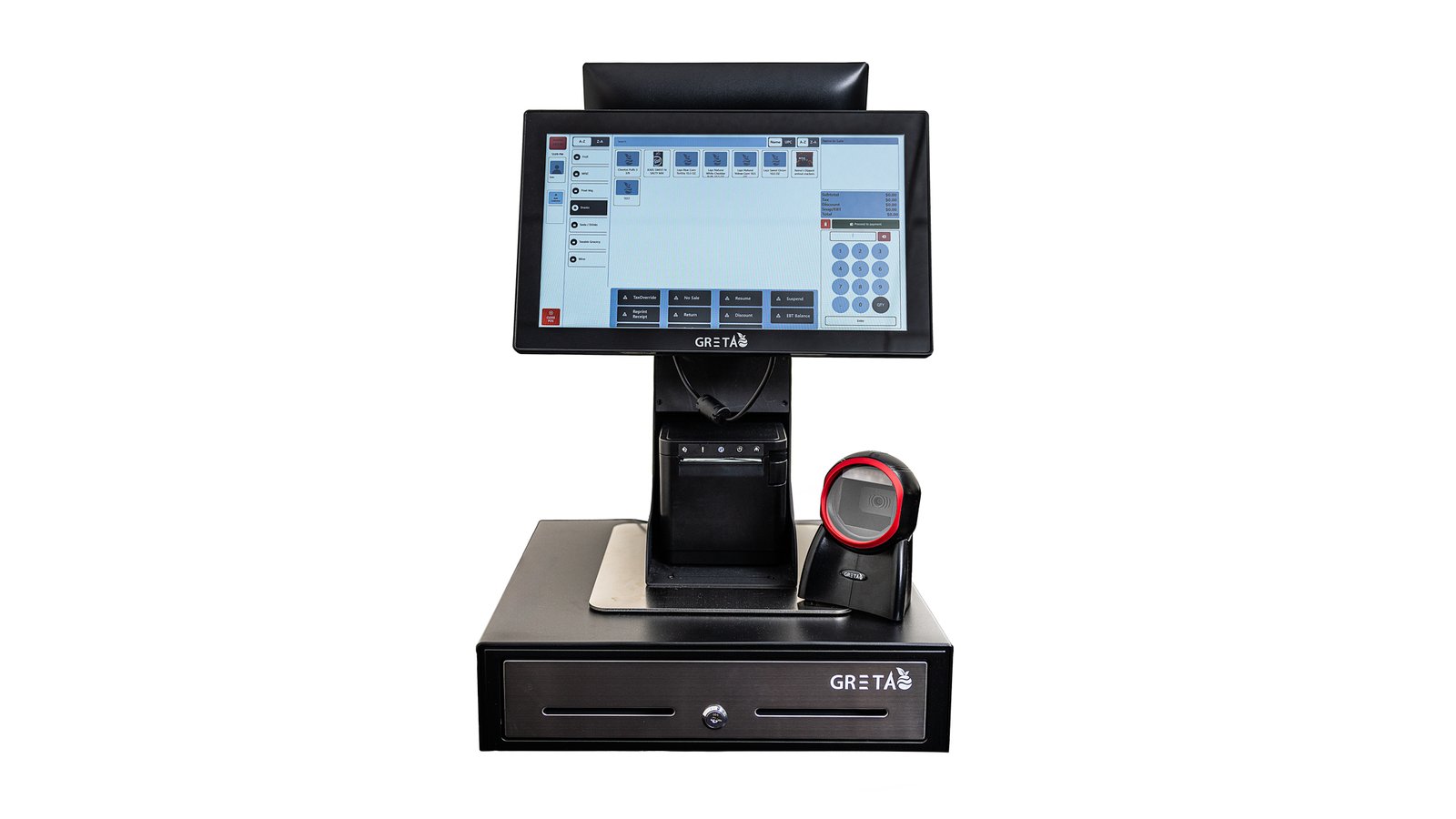
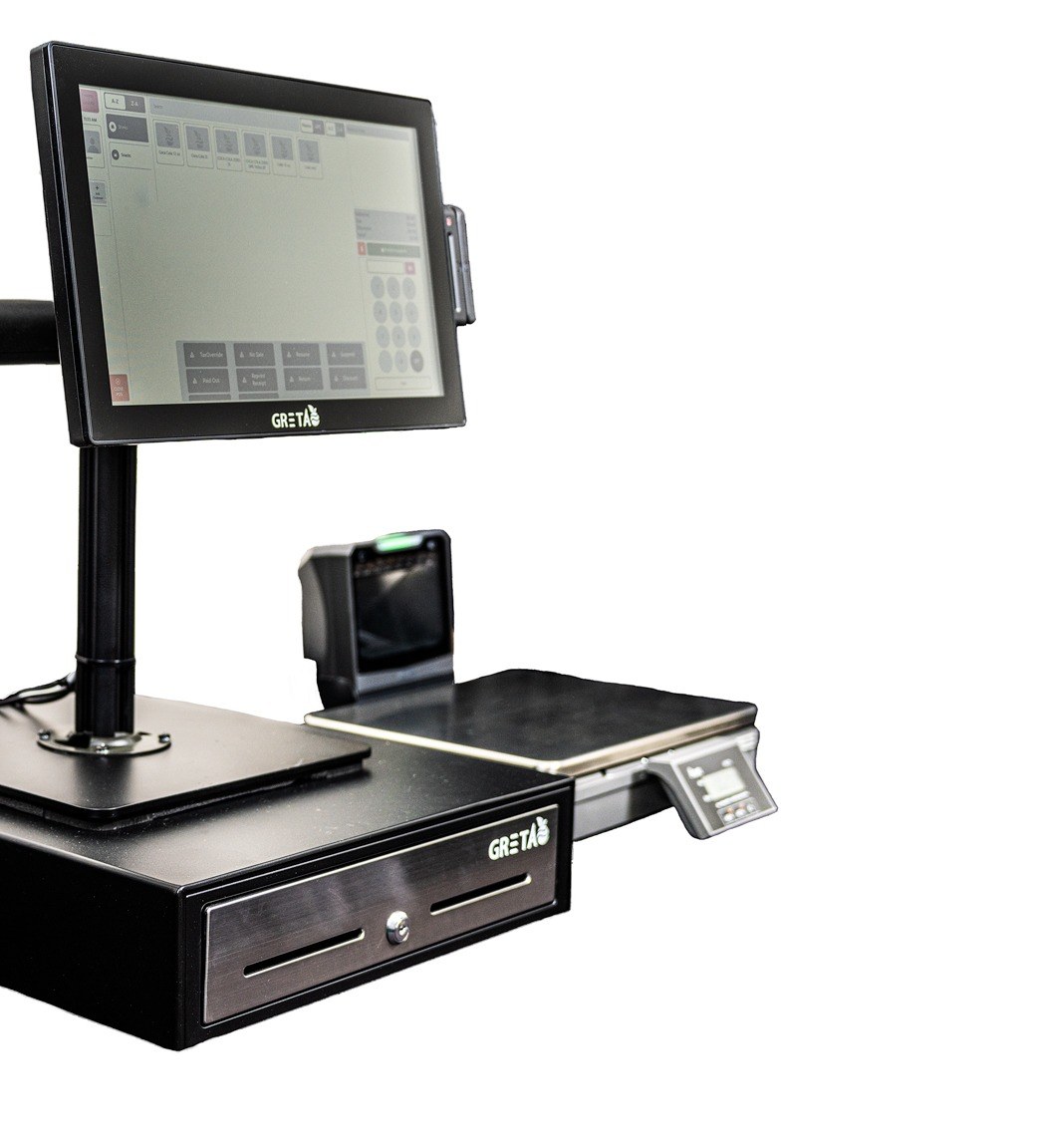
Built for grocery checkout: fast SKU lookup, weighed items priced live from the scale, EBT Balance lookup at the register, integrated barcode scanner and receipt printer, branded cash drawer. One station or many, all on the same cloud.
Integrated scales & label printing
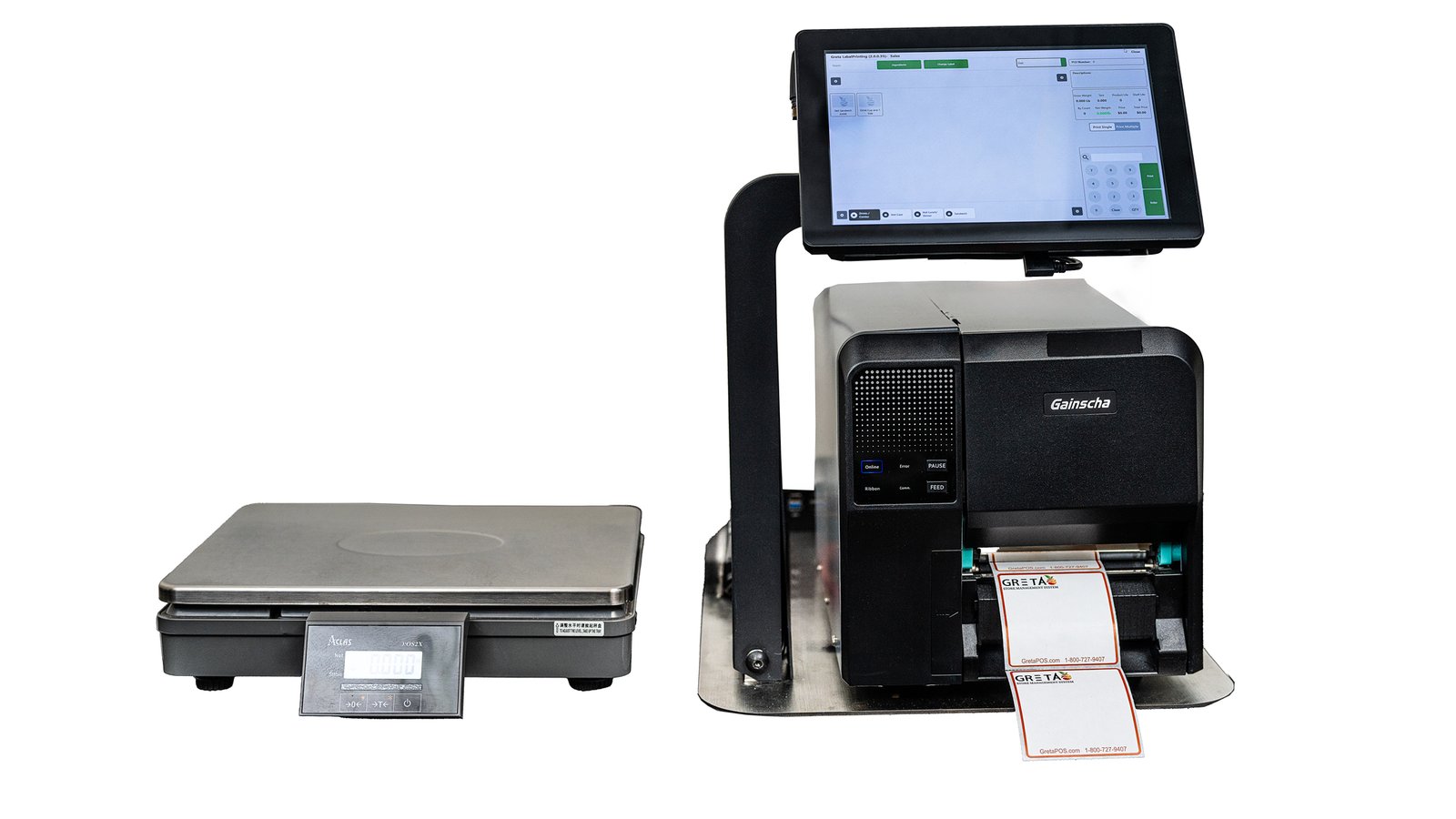
Above-counter and in-counter scales for deli, butcher, and produce departments. Connected directly to the POS — weigh the item, the label prints with the weight, the price, and the scannable barcode. No re-keying, no clipboard, no math by the cashier.
Dual pricing on the label
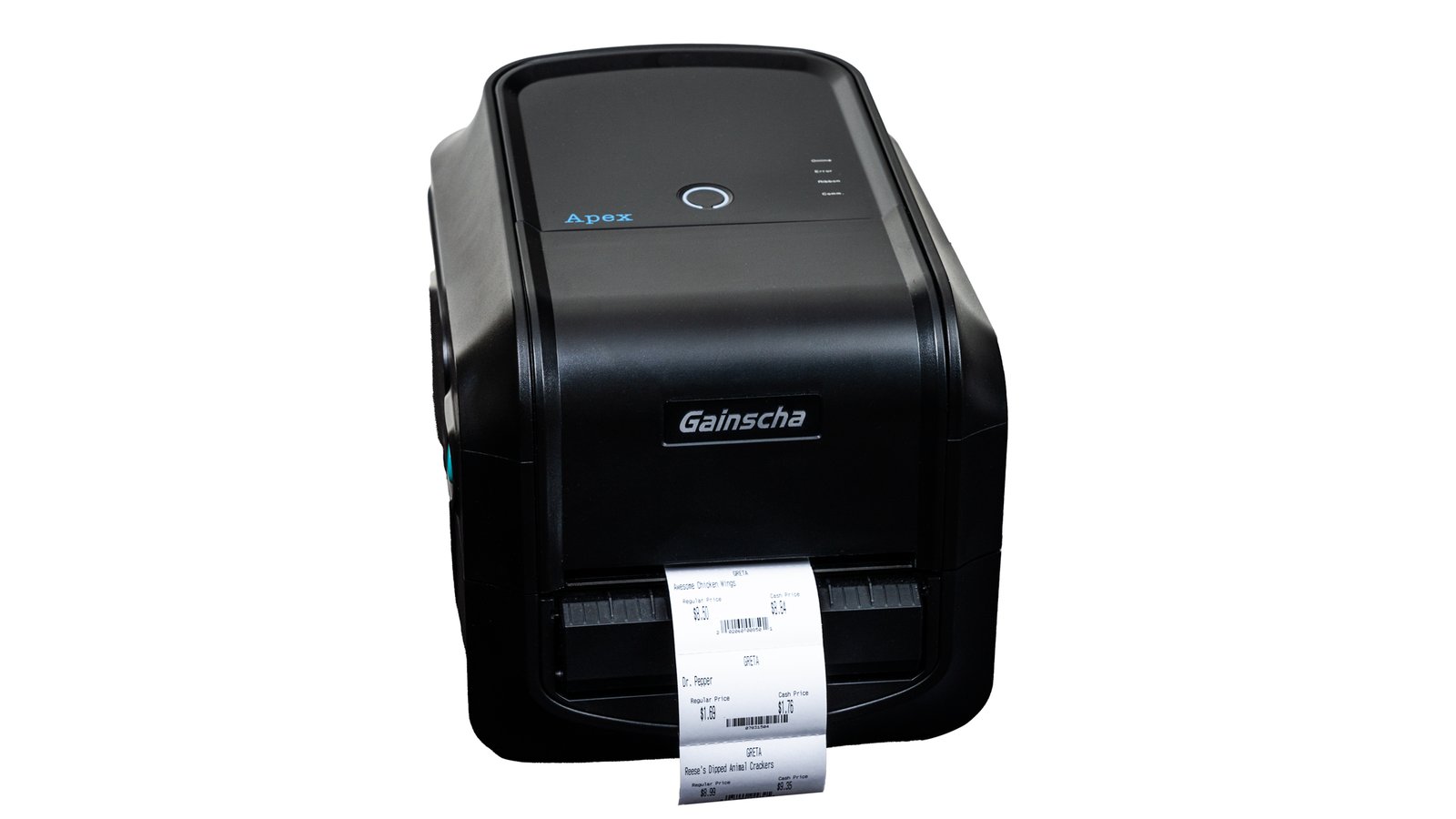
Cash and card prices print directly on the weight label, side by side, with the barcode that scans at checkout. The customer sees both prices on the item itself. The cashier does not have to remember anything. The label is the source of truth.
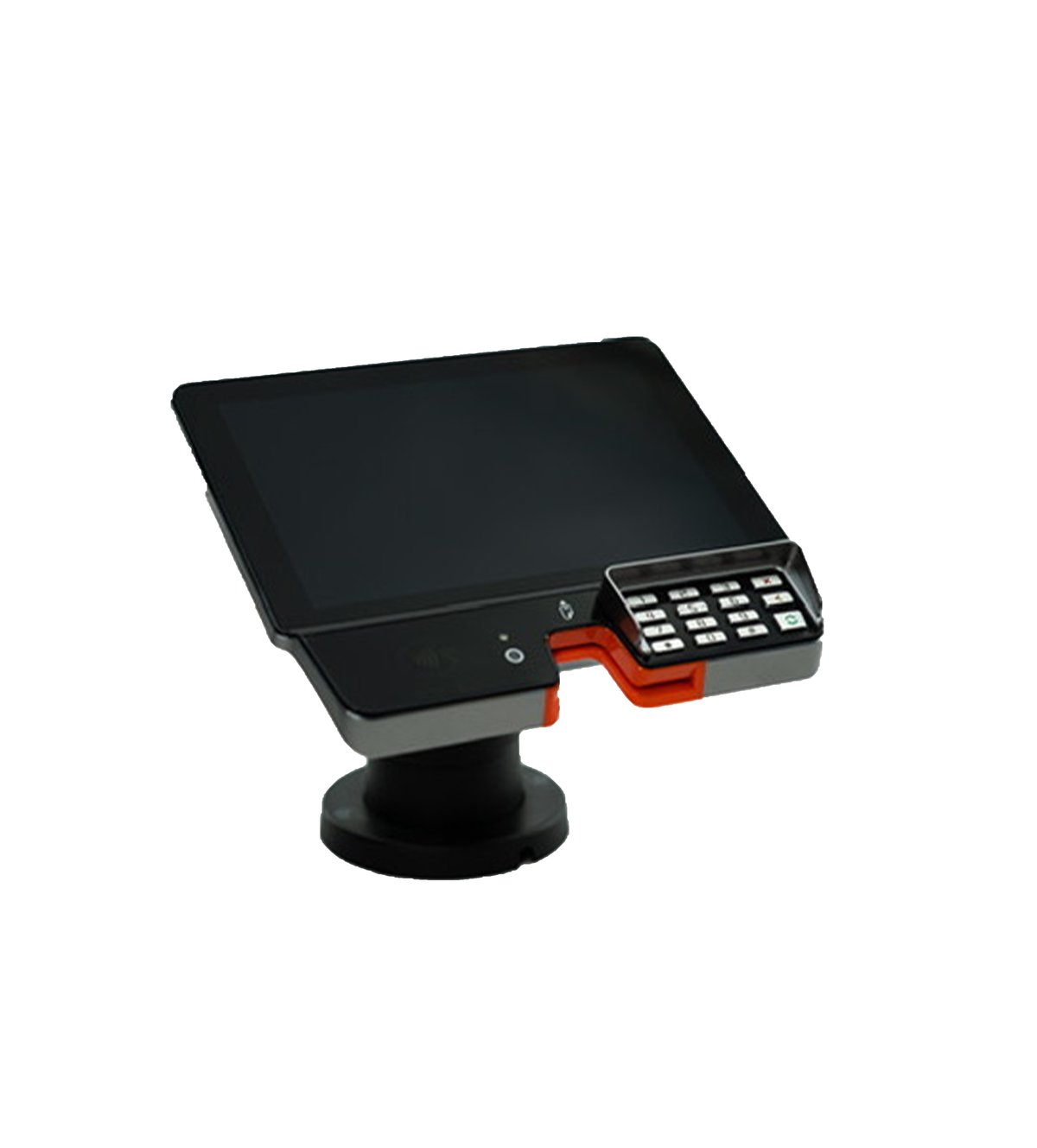
Payment at the counter
Customer-facing payment terminal with PIN pad, chip, contactless, and the same EBT and WIC support as the register. Mounts to the countertop on the customer side — the customer pays, the cashier finishes bagging.
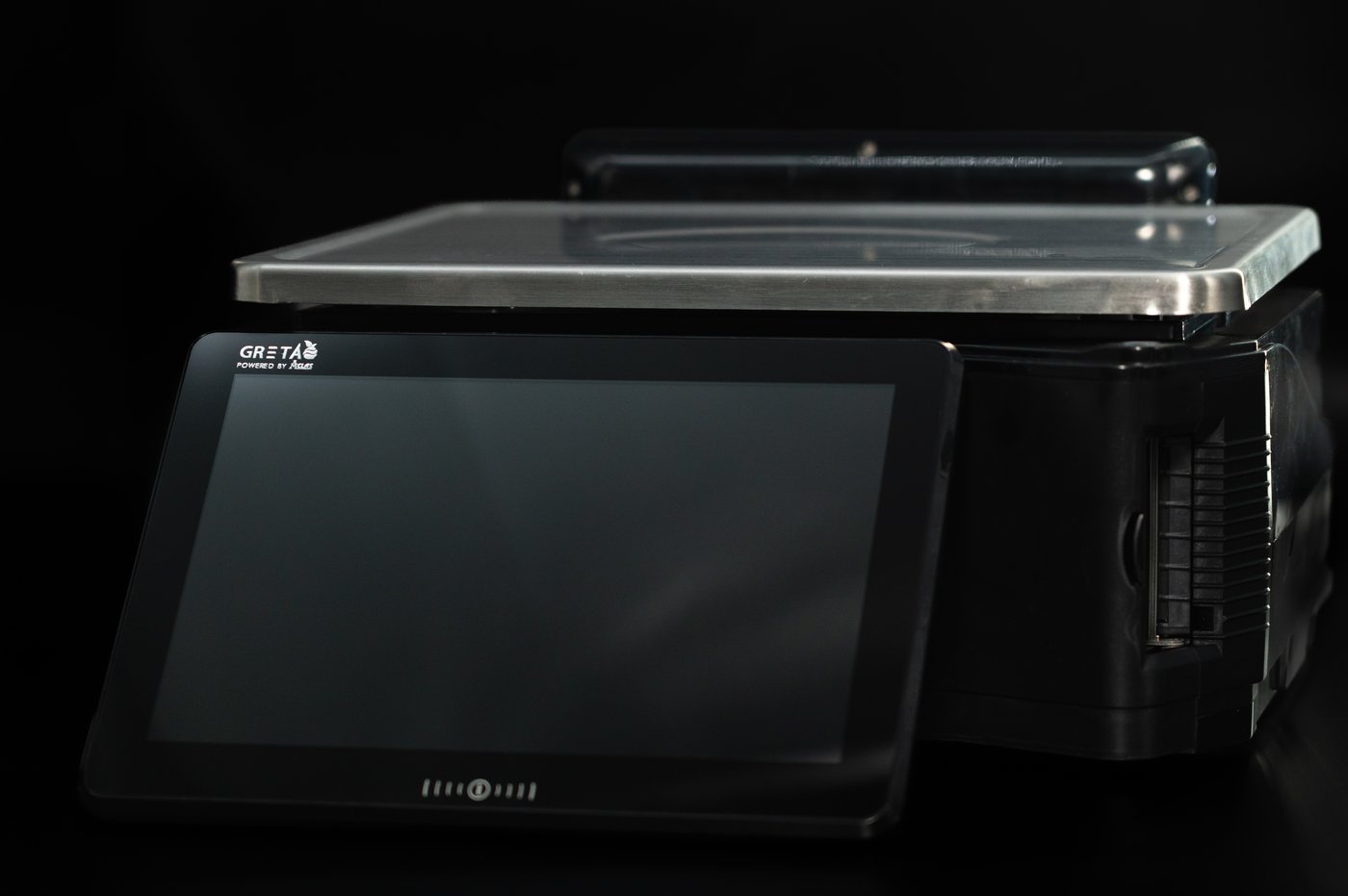
EBT, WIC, and vendor management
EBT and WIC support is native — no separate terminal, no workaround. Vendor catalogs, supplier purchase orders, cost-of-goods tracking, and margin automation come built in. The back office runs on the same platform as the front register.
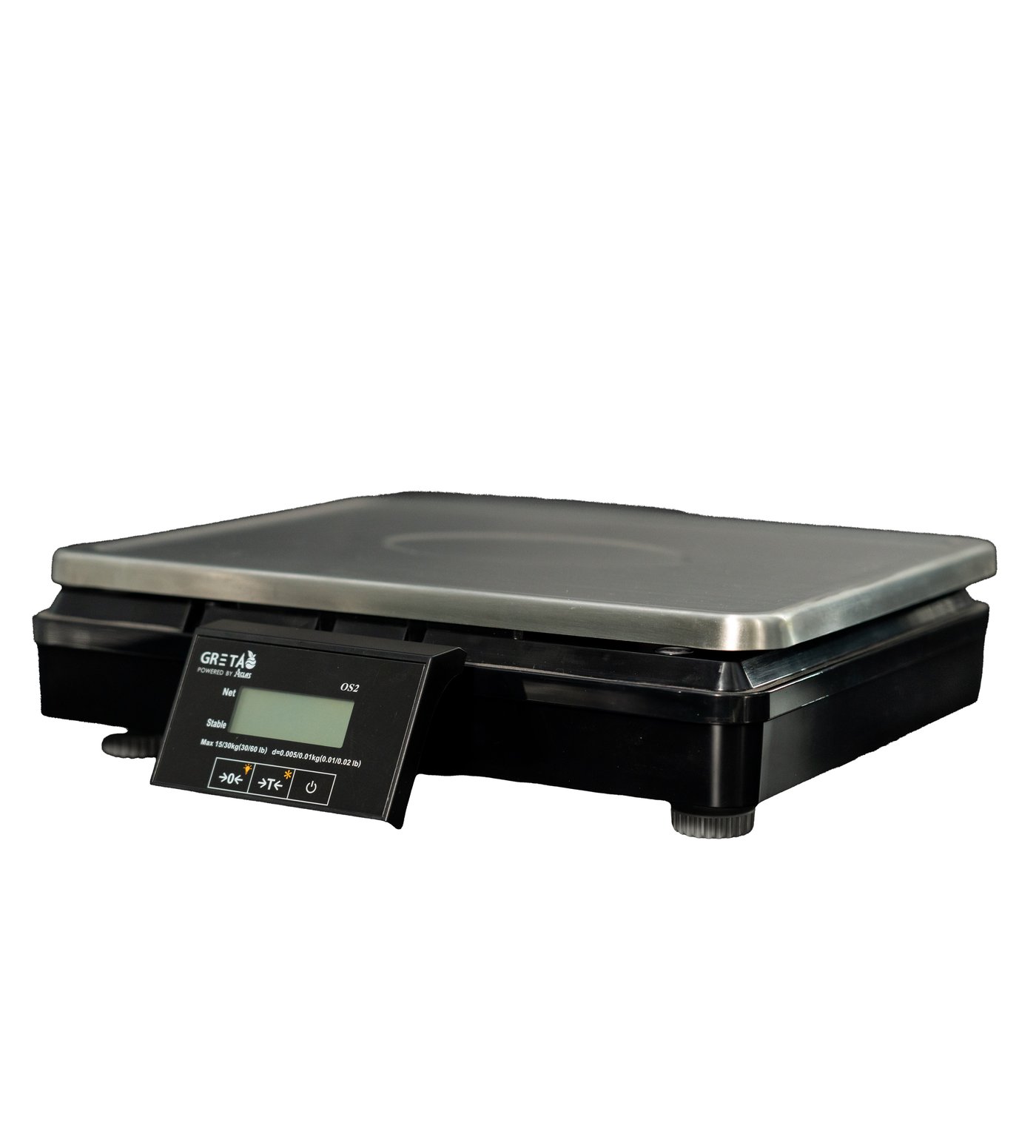
Cloud + remote management
Manage one store or twenty from anywhere. Push pricing changes across the chain at midnight. Pull a labor report from your phone on Saturday. The owner does not have to be in the store to know what the store is doing.
The cleanest dual-pricing implementation in the grocery industry.
Most dual-pricing systems put the second price on a signage card next to the product or rely on the cashier to remember which discount applies at the register. Greta puts both prices on the label printed at the scale — with the barcode that drives the transaction. The customer sees the cash price and the card price on the item itself before it gets to the checkout. The cashier scans the label, the system applies the correct price, and the receipt matches the label exactly.
Dual pricing is one of four processing programs Tabletop matches to grocery merchants. See our dual-pricing program page for how the program works at the card-network level.
Run the store without being in the store.
The owner of a grocery store does not need to stand at the register to know what the register is doing. Greta is cloud-native, so labor variance, daypart sales, slow-moving inventory, vendor purchase orders, and the daily close-out roll into one dashboard you can pull up from your phone. Step away on a Saturday and still catch the deli running 8% high on labor by Tuesday afternoon — not Monday after the books closed.
For multi-store operators: standardize pricing and tax setup across stores when consistency matters. Diverge them when the local market needs it. Compare locations side-by-side in real time. Roll the whole enterprise up or drill into a single store's deli department for last week's margin.
Caller ID at the register, accounting at the back office, e-commerce on top.
Greta connects to the store phone line. When a regular customer calls in for a deli order, a custom cut at the butcher counter, or a holiday catering tray, the POS pulls up their account on the cashier screen before the cashier answers. Name, last few purchases, special-order notes, allergy flags. The cashier picks up with context, not cold.
Accounting connects to QuickBooks and Sage so the daily close pushes without re-keying. Built-in e-commerce runs off the same catalog as the in-store register — menu and pricing changes propagate automatically. Vendor catalogs, supplier purchase orders, and margin reports run inside the same platform.
Greta plus the systems you already run.
The POS is not the whole stack. Tabletop fits Greta to the rest of your operation.
Accounting integrations push the daily close to QuickBooks and Sage automatically. The built-in e-commerce uses the same catalog as the in-store register — menu and pricing changes propagate everywhere. Vendor management and supplier purchase orders run inside the same platform; you do not need a second tool for back-office inventory.
For payments, Tabletop matches Greta to whichever processing program makes sense for your card volume and customer mix — dual pricing on the label, credit surcharge, cash discount, or traditional flat-rate. The processing program is a separate decision from the POS choice; we walk you through both on the cost analysis call.
Where Greta earns its keep.
Greta is grocery-only by design. Outside grocery, we recommend other products on Tabletop's stack — not Greta.
Independent grocery stores
Single-store operators with a deli, butcher, or produce department. The core Greta fit — scales, label printing, vendor management, and dual pricing on the label.
Ethnic markets
Multi-language register support, custom-cut workflows at the butcher counter, multi-vendor management for diverse supplier networks — the patterns Greta was designed around.
Butcher shops
In-counter and above-counter scales, label printing with weight and price, custom-cut order tracking, and the caller-ID workflow for phone orders during the holidays.
Small-to-mid grocery chains
Multi-store cloud architecture, side-by-side location comparison, centralized pricing and tax setup with per-store overrides. The owner manages from one dashboard.
No public rate card. Here's why — and what to do instead.
Greta pricing depends on how many stations you need, which scale configuration fits your deli and butcher counters, how many label printers you run, what your monthly card volume looks like, and which processing program (dual pricing, surcharge, cash discount, or traditional) makes sense for your store. A public rate card would either be a lowest-case-only marketing number or so qualified it stops being useful.
What we do instead: a 5-minute statement review. Send us your most recent processor statement. We read it, compute your effective rate, sketch out what Greta plus the right processing program would actually look like in your store, and tell you honestly whether switching is worth it. If your existing setup is already competitive — or if Greta is the wrong tool for your store — we tell you that.
Greta questions, answered.
What kind of grocer is Greta built for?
Greta is built for grocers with established weekly volume — typically multi-station operations running deli, butcher, or produce departments with their own scale workflows. Independent grocery, ethnic markets, butcher shops, and small-to-mid grocery chains are the core fit. If you run a small convenience store with no fresh department, Greta is the wrong tool and we will tell you that on the cost analysis call.
Does Greta support EBT and WIC?
Yes. EBT and WIC are supported natively at the register. The cashier interface includes a dedicated EBT Balance lookup. This matters for grocery operators serving SNAP and WIC customers — you do not need a separate terminal or workaround.
How does Greta print dual pricing on weight labels?
The deli, butcher, and produce scales are integrated directly with the POS. When you weigh an item, Greta prints a label that shows both the regular price and the cash price on the same tag — with the barcode that scans at checkout. The cashier does not have to remember anything. The label is the source of truth.
Can Greta handle multiple stores?
Yes. Greta is cloud-native, so multi-store operators manage menu, pricing, vendor catalogs, and reporting from one dashboard. Compare locations side-by-side, push pricing changes across the chain or per-store, and roll the enterprise up in real time.
What is the caller ID integration?
Greta connects to your store phone line. When a regular customer calls in, the POS pulls up their account on the cashier screen before the cashier answers — name, purchase history, special order notes. Useful for stores that take phone orders for deli platters, custom cuts, or holiday catering.
What does Greta cost?
Greta pricing depends on station count, scale configuration, label-printer setup, and which processing program (traditional, surcharge, cash discount, dual pricing) fits your card volume. We do not post a rate card because real numbers depend on your statement. Send us yours and we will come back with a real comparison — that is the cost analysis call.
Who installs Greta and who supports it?
Tabletop is the Greta reseller. We run the cost analysis, design the station layout for your store, install the scales and label printers, train your team, and stay on as your day-zero support contact. When something needs fixing at 6 AM before the store opens, you call us.
Get a real Greta cost picture.
Send your most recent processor statement. We will run the numbers, walk you through what Greta would actually look like in your store, and tell you honestly whether switching is worth it.
Complimentary Cost AnalysisStatement review, savings projection, and full tech stack recommendations.